
Immiscible CO2 Flood
Injecting below minimum miscibility pressure
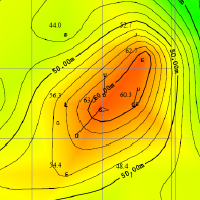 Can a CO2 flood be run at low pressure? If so, how will successful will it be?
One operator proposed modifications to an immiscible CO2 flood. In his application, he reported on the progress of the flood and claimed additional recovery by several means even without miscibility.
Understanding the intelligence contained in this application is important to anyone wanting to try a gas flood.
You can see his application documents in moments by clicking on the button below labelled 'Buy these application documents now.'
Get details of this cool tech Subscribers get them for freeExperimental status over
With the approval of this application, the earlier experimental status was removed. This allows you to review the application and then check out the performance in Accumap.
All applications are ground truthed to real UWIs. You won't find that in SPE papers.
?subject=Help me get up to speed on miscible flooding&body=Help me get up to speed on miscible flooding%0D%0A%0D%0AMy Name:__________ %0D%0AMy Phone Number:__________ %0D%0A%0D%0A(Or call Proven Sales at 403-803-2500.)">Contact Proven for support. We stay on top of flood strategies.
And you won't find SPE papers that deal with CO2 flooding below minimum miscibility pressure.
Below minimum miscibility pressure
In EOR courses, you'll be taught that CO2 mixes with oil only above a certain pressure. This minimum miscibility pressure (MMP) is almost always much higher than virgin pressure.
Some operators boost the pool pressure to the MMP. But increasing the pool pressure to 20-30% above original pressure is costly and presents some operational risks.
These days, many more operators are injecting at below MMP because it's easier. The application that's subject of this blog post was very scientific in its study of injection below MMP. And they believed incremental oil reserves were about 10%.
Oil swelling
The operator believed that incremental oil recovery was a result of oil interactions with the reservoir fluids causing oil swelling, decreased interfacial tension, and reduced oil viscosity.
Traditional CO2 floods count on miscibility reservoir fluids. The resultant mixture is lighter and thinner allowing better drainage.
Gas lift
This flood, like many other gas floods get some of their cost advantage from auto-lift and unique type of gas lift. In auto-lift, gas from gas cap is perforated in each wellbore and allowed to lift the liquid column in a tightly controlled manner.
This type of lift is very inexpensive to set up and maintain. A reduction of lifting costs further adds to the economic viability of gas floods.
?subject=I want a one day trial of AppIntel&body=Sign me up for a one day AppIntel trial so I can search quickly for all the miscible floods.%0D%0A%0D%0AMy Name:___%0D%0AMy Phone Number:____%0D%0A%0D%0AType of applications:___%0D%0A%0D%0APricing: https://www1.appintel.info/short-term-search/%0D%0A%0D%0A(Or call AppIntel Sales at 403-803-2500.)">Contact us now for a one day trial.
Tags: Gas Injection, Flood
 Granger Low 15 Feb 2017



Let AppIntel AI watch this CO2 dispute for you
19 new developments today

Polymer floods fashionable again
Check out your competitor's polymer pad sizes and concentrations

Give us more flexibility in thermal schemes!
Reducing thermal heavy oil scheme red tape

ER schemes are hot right now. Here's the catch.
Cheap capital, fast reserves – but only if you get it right

Sequestering CO2 may disrupt nearby salt caverns?
Prompts conflict between operators

Breathing life into SAGD
Air injection as well as steam

Injecting steam and flue gas into heavy oil
Capture Carbon. Improve Recovery.

Can we save the world by sequestering CO2?
Plans to store millions of tons of CO2

Save the world by recycling produced brine
Saline water treatment
 Calgary, Alberta, Canada
 Share
Share